Scholar · Journalist · Freedom Fighter · Nation Builder
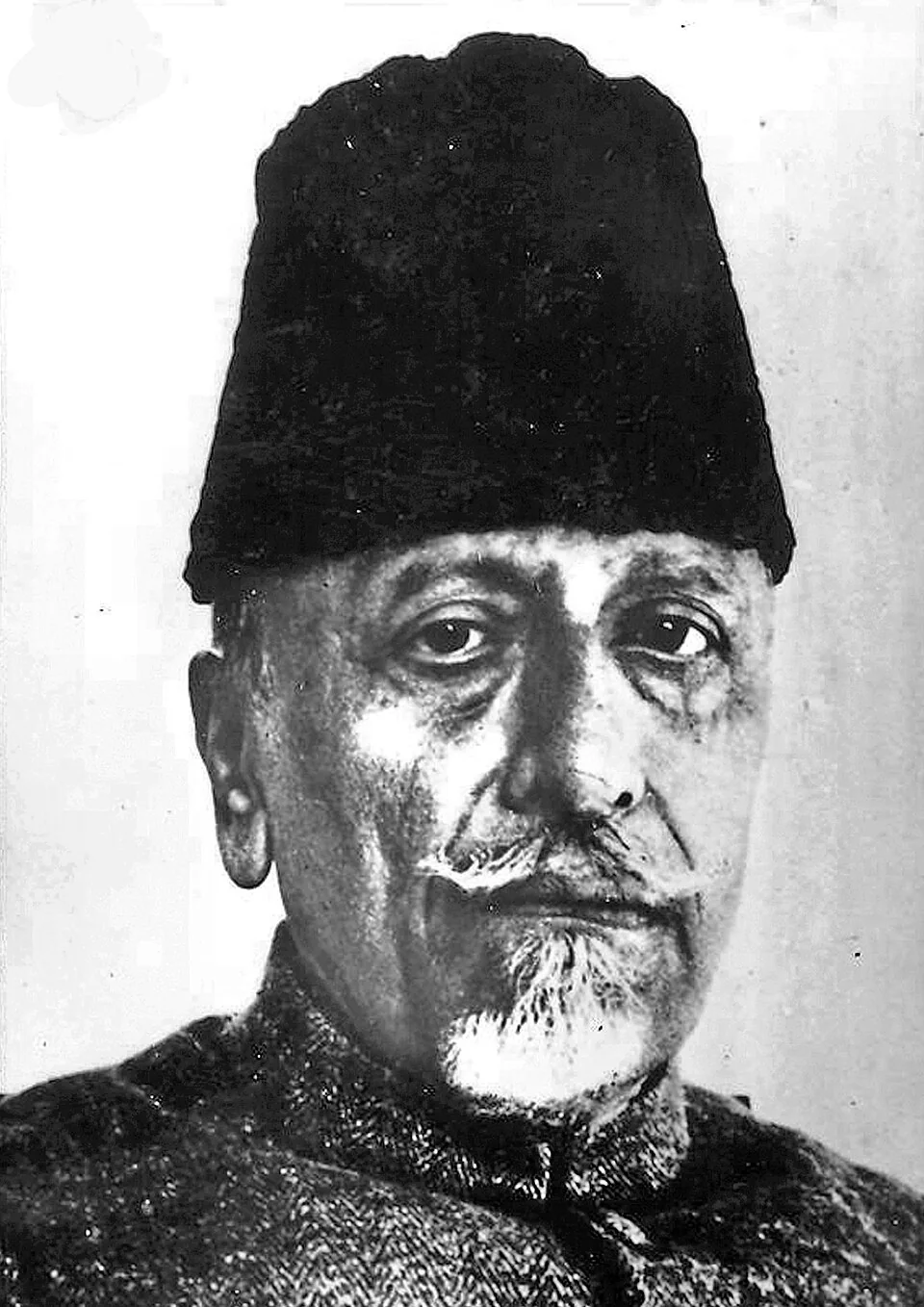
Maulana Abul Kalam Azad
1888 1958
A scholar whose ideas travelled through journalism, freedom, unity and education to help shape modern India.
Section 01
A life that refuses
a single description.
Most public lives can be summarised in one word. His cannot. Maulana Abul Kalam Azad moved between the seminary and the newsroom, the prison cell and the cabinet room, the classical text and the modern laboratory — and each of those rooms changed what he did in the next one.
-
i
Scholar
Trained in the classical Islamic disciplines within his own household, and then, by his own reading, in history, philosophy, mathematics and the sciences. Available accounts describe a mind formed largely outside any conventional school.
-
ii
Writer
An Urdu prose stylist before he was anything else. He was editing journals in his teens, and the sentence — long, cadenced, argumentative — remained his primary instrument for fifty years.
-
iii
Journalist
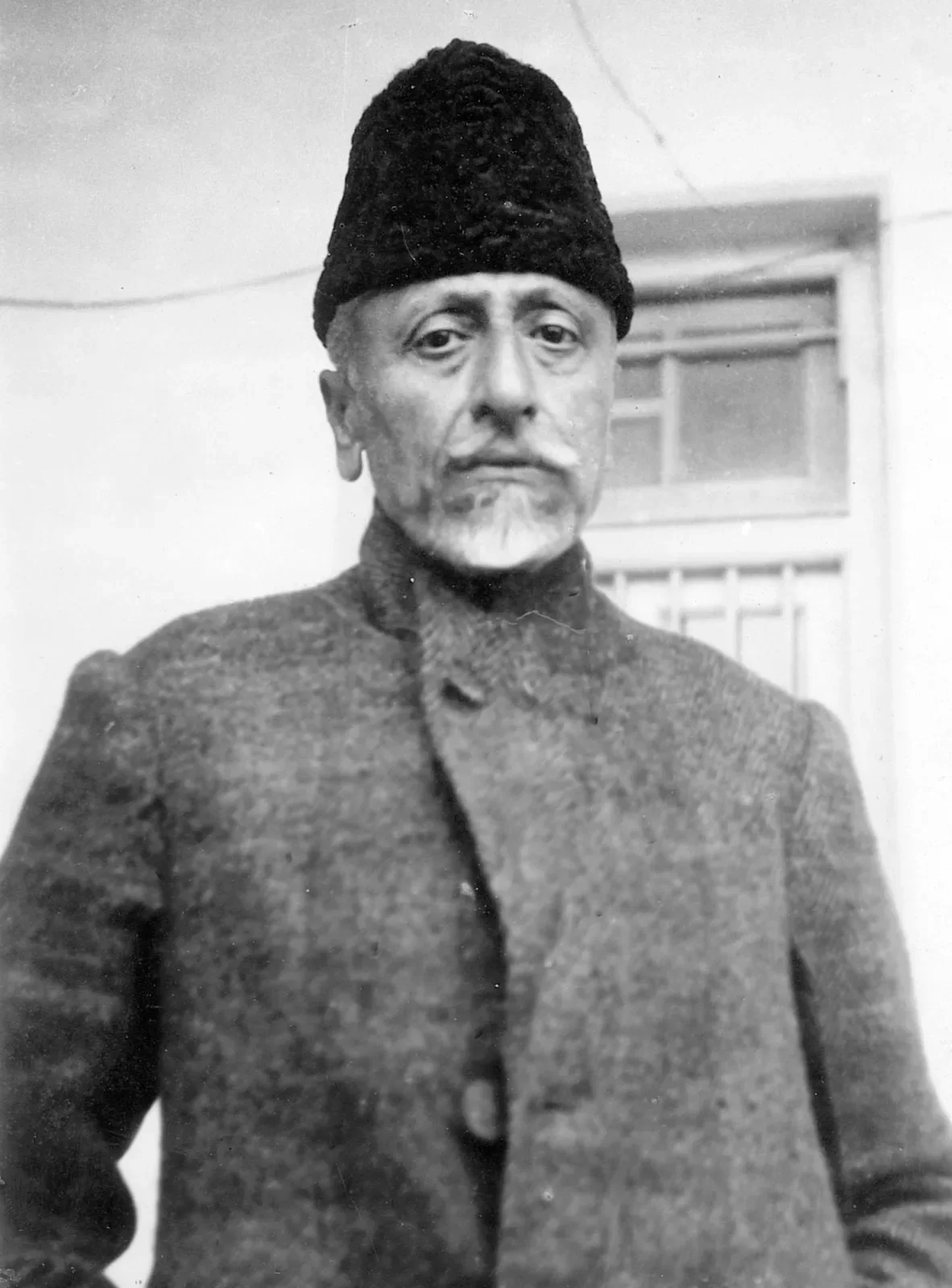
Al-Hilal in 1912 and Al-Balagh in 1915 carried a nationalist argument into Urdu homes. Both were shut down by the colonial state. That is the clearest measure of how seriously they were read.
-
iv
Freedom fighter
From the Khilafat and Non-Cooperation years onwards he was inside the national movement, and repeatedly inside colonial prisons — including the long internment at Ahmednagar Fort from 1942.
-
v
Congress president
Elected in 1923, at thirty-five, the youngest person to hold the office; elected again in 1940 and holding it through the war, Quit India and the negotiations that ended in 1947.
-
vi
Education minister
India’s first, from 15 August 1947 until his death in 1958. Eleven years in which the country’s university, technical, scientific and cultural architecture was argued into existence.
He did not move from one identity to the next and leave the last behind. He carried all of them at once — which is why the education minister still wrote like an editor, and the editor had already been thinking like a nation builder.
Section 02
The power of
the printed word.
In colonial India, a printing press was not a business. It was a political instrument — and the government knew it.
By the early twentieth century the Indian press had become one of the few places where an argument about the country’s future could be made in public and at scale. Vernacular newspapers reached readers whom English-language politics never touched. They were also, for exactly that reason, closely watched: a body of press legislation gave the colonial administration the power to demand securities, forfeit them, and stop a paper entirely.
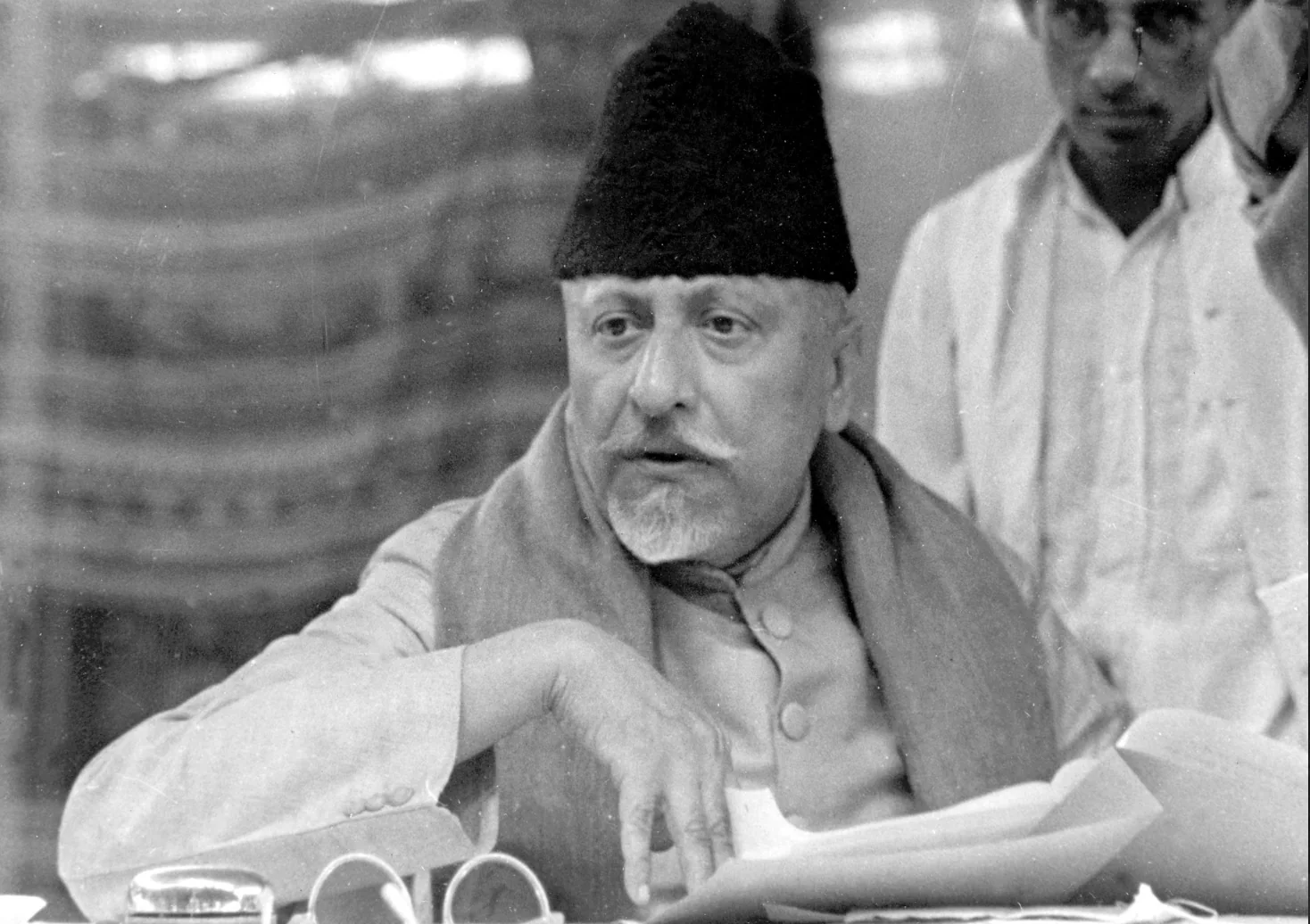
Into this environment, in July 1912, Azad launched Al-Hilal — a weekly in Urdu, produced to a standard of design and printing unusual for its moment, and written in a prose that assumed its readers were serious people. Its argument was twofold: that Indian Muslims belonged inside the Indian national movement, not beside it; and that cooperation between communities was not a tactic but a necessity.
Government and institutional accounts record that Al-Hilal was suppressed by the colonial government under press legislation in 1914. Azad responded by starting a second weekly, Al-Balagh, in November 1915. It, too, was stopped, and in 1916 he was removed from Calcutta under wartime regulations and interned — a restriction that lasted until 1 January 1920.
Weekly · Urdu · Calcutta
Al-Hilal
- First issue
- 13 July 1912
- Suppressed
- 1914
- Successor
- Al-Balagh, from 12 November 1915
Section 03
Freedom was the demand.
Unity was the argument.
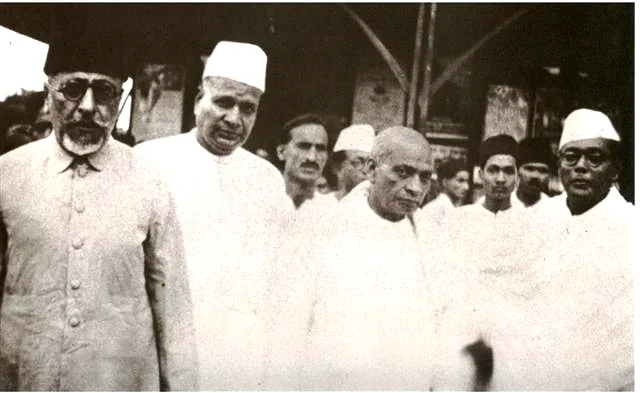
Azad entered mass politics during the Khilafat and Non-Cooperation years around 1920, and remained inside the Indian National Congress for the rest of his life. What he brought to it was not only organisational work but a specific argument, which he made again and again, in print and from the chair.
That argument is usually called composite nationalism. Its claim was that the Indian nation was not a collection of separate religious communities negotiating with one another, but a single political people formed by a long shared history — and that Indian Muslims were constitutive of that people rather than a minority appended to it.
He advanced this position in direct opposition to the demand for a separate state, and he did so from a position that could not easily be dismissed: as a religious scholar of standing, arguing on his own ground. Historians have long noted the political cost of that position; he was attacked from more than one direction for it.
“I am proud of being an Indian. I am a part of the indivisible unity that is Indian nationality.” Presidential address, Indian National Congress, Ramgarh session, 1940 — widely reproduced English translation
-
1923
First presidency
Elected president of the Indian National Congress at its special session in Delhi — at thirty-five, the youngest to hold the office.
-
1940
Second presidency
Elected again at the Ramgarh session, and remained president through the war years until 1946.
-
1942
Quit India
Arrested with the Congress leadership days after the movement was launched, and held at Ahmednagar Fort.
-
1946
Cabinet Mission
Led the Congress delegation in negotiations over a federal constitutional settlement that would have kept India undivided.
Section 04
Education was
not just a policy.
It was a foundation
for the future.
On 15 August 1947 Maulana Azad became the first Education Minister of independent India. He held the portfolio until his death on 22 February 1958 — eleven years, at the exact moment when a new state had to decide what it would teach, to whom, and why.
The problem in front of him was not abstract. Literacy across the country was low. Girls’ education lagged far behind boys’. There were very few institutions capable of training engineers, scientists or research scholars at the scale a modern economy would need. And there was no settled machinery for funding universities or maintaining standards across them.
Government sources record his sustained emphasis on free and compulsory education for children, on the education of women and girls, on modern science, on technical education, and on the quality of teaching as a matter of national consequence. His case for all of it was consistent: a democracy that cannot educate its citizens cannot expect them to govern it well.
- 11 yrs
In office
1947 to 1958 — the longest tenure any Indian education minister has held.
- Primary
Universal access
Free and compulsory schooling for children, argued as an obligation of the state.
- Girls
Women’s education
Treated not as a separate welfare question but as central to national capacity.
- Science
Modern knowledge
Scientific and technical learning placed at the centre of a new economy.
Section 05
Institutions, ideas, impact.
Institutions are built by many hands. What follows describes Azad’s documented role — as the minister who inaugurated, chaired, funded or steered these bodies — without claiming sole authorship of any of them.
-
1950
Founding president
Indian Council for Cultural Relations
Founded in April 1950 with Azad as its founding president. Its remit — cultural exchange between India and the rest of the world — reflected his long-standing conviction that a country’s standing rests on its intellectual and artistic life as much as on its economy.
-
1951
Established under his ministry
Indian Institute of Technology, Kharagpur
The first of the IITs was established in 1951, during his tenure as Education Minister, following the recommendation of a committee appointed to consider higher technical education. The network that grew from it became the country’s principal engine of engineering education.
-
195254
Inaugurated / resolved under his ministry
The three national academies
Sangeet Natak Akademi (established by government resolution in 1952), Sahitya Akademi (inaugurated 12 March 1954) and Lalit Kala Akademi (inaugurated by Azad on 5 August 1954) gave music, drama, letters and the visual arts standing bodies of their own.
-
1953
Inaugurated by Azad
University Grants Commission
Formally inaugurated by Azad on 28 December 1953 to coordinate and maintain standards in university education. It was given statutory footing by an Act of Parliament in 1956, and remains the central body in Indian higher education.
Section 06
Explore the journey.
Eight chapters, each a complete account in itself. Read them in order for the whole life, or go straight to the part you came for.
- 01OriginsBirth in Mecca in 1888, a scholarly household in Calcutta, and an education assembled almost entirely outside the school system.
- 02IdeasThe complete biography — how a scholar’s intellectual formation turned into a lifetime of public argument and public office.
- 03The Printed WordWriting as public action: the journals, the prose, and the making of an Urdu political readership.
- 04FreedomKhilafat and Non-Cooperation, civil disobedience, repeated imprisonment, and the Quit India years.
- 05UnityTwo Congress presidencies, and a sustained public case for composite nationalism against communal politics.
- 06A Nation DividedThe negotiations of 1946–47, his opposition to Partition, and what he said to those who stayed.
- 07EducationEleven years as India’s first Education Minister, and the argument that education is the work of democracy.
- 08LegacyThe Bharat Ratna of 1992, National Education Day on 11 November, and what still follows from his work.
Section 07
What outlives
a life of ideas.
Since 2008, India has observed his birth anniversary — 11 November — as National Education Day.
The choice of date is not ceremonial. It fixes the country’s annual conversation about education to the person who first had to build its national machinery, and to the arguments he made while doing it: that access matters more than excellence for a few, that girls’ education is not optional, that science and the humanities are not rivals, and that cultural confidence and openness to the world are the same disposition.
He was awarded the Bharat Ratna, India’s highest civilian honour, posthumously in 1992. But the more exacting measure of his legacy is ordinary and daily: the university that is funded, the laboratory that is staffed, the girl who is enrolled, the argument that is settled by evidence rather than by noise.